
Neutral Dining Room Decor Ideas for Effortless Elegant Style
Looking to revamp your dining space with a touch of elegance — but want to keep it simple and timeless? A neutral dining room might be just what you need. These spaces are calm, classy, and never go out of style. Whether you’re going for modern minimalism or cozy farmhouse charm, neutral colors can bring peace and polish to your dining area without overwhelming the eyes.
Let’s explore how to create a neutral dining room that feels both effortless and elegant — without feeling boring or bland.
Why Choose a Neutral Dining Room?
Before diving into the design ideas, you might be wondering, “Why go neutral?” That’s a fair question!
Neutral colors like whites, creams, beiges, grays, and soft browns make an excellent backdrop for any decor style. They allow you to play with texture, layer different materials, and easily switch things up through the seasons.
Think of it like your favorite pair of jeans — they go with anything and never go out of fashion.
Here are a few reasons to love neutral dining room decor:
- Timeless appeal: You won’t get tired of neutrals, and they’re not likely to go out of style.
- Easy to update: Add a colorful centerpiece or seasonal decor as needed, without redoing the room.
- Creates calm: Neutral tones bring a sense of serenity that’s perfect for relaxed meals and gatherings.
Now, let’s walk through some stunning neutral dining room decor ideas that you can bring to life in your own home.
1. Embrace All-White Everything
An all-white dining room may sound stark, but done right, it’s the ultimate in elegance. Use various shades of white (yes, there are many!) to add depth and interest. Texture is key here — think woven chairs, linen curtains, and a soft rug underfoot.
Pro tip: Soften up a white room with natural wood accents or brass lighting for a cozy, lived-in feel.
2. Layer Natural Textures
Neutral doesn’t mean flat. One of the best ways to breathe life into a neutral dining space is by layering textures.
- Wicker or rattan chairs
- Wool or jute rugs
- Linen tablecloths and curtains
- Rustic wood dining table
These layers add character and warmth, creating a space that feels polished but never cold.
3. Add Warm Wood Tones
Wood furniture is a staple in neutral dining rooms. From oak to walnut, wooden pieces bring a natural element that instantly warms up pale palettes.
Style tip: Pair a light-pine table with black metal chairs for a Scandi-modern vibe, or go with reclaimed barnwood paired with slipcovered chairs for that farmhouse look.
4. Mix Modern and Traditional Pieces
A great way to make a neutral space interesting is with contrast — not just in colors, but in style. Try mixing a classic farmhouse table with sleek upholstered chairs. Or pair a vintage sideboard with a modern chandelier.
These contrasts give your space personality without deviating from your neutral color theme.
5. Go Bold With a Neutral Wallpaper
Yes, you can still make a statement with neutral tones! Consider a subtle patterned wallpaper in beige, taupe, or gray to bring dimension and style to your walls — without overwhelming the space.
Idea: A soft botanical or geometric wallpaper can act as an artful backdrop for simple furniture.
6. Highlight Statement Lighting
In a neutral room, lighting becomes a focal point. A striking chandelier or oversized pendant light can elevate the entire space. Brass, matte black, or even clear glass fixtures work beautifully against a soft-toned backdrop.
Lighting tip: Choose a light fixture that complements your dining table shape — long fixtures for rectangular tables and round ones for circular tables.
7. Keep It Cozy With Soft Upholstery
Add plush touches with upholstered dining chairs or a cozy bench to soften the overall look. Fabrics like velvet, linen, or bouclé in cream or taupe shades work wonders.
Not only do they add texture, but they also make your guests want to linger at the table just a bit longer.
8. Ground the Room With a Neutral Rug
One simple way to bring cohesion to your dining room is with a neutral rug. It anchors the furniture and adds softness underfoot — especially important if you have wood or tile floors.
Helpful hint: Choose a rug that’s large enough so all the chairs stay on it, even when pulled out.
9. Keep Accessories Minimal
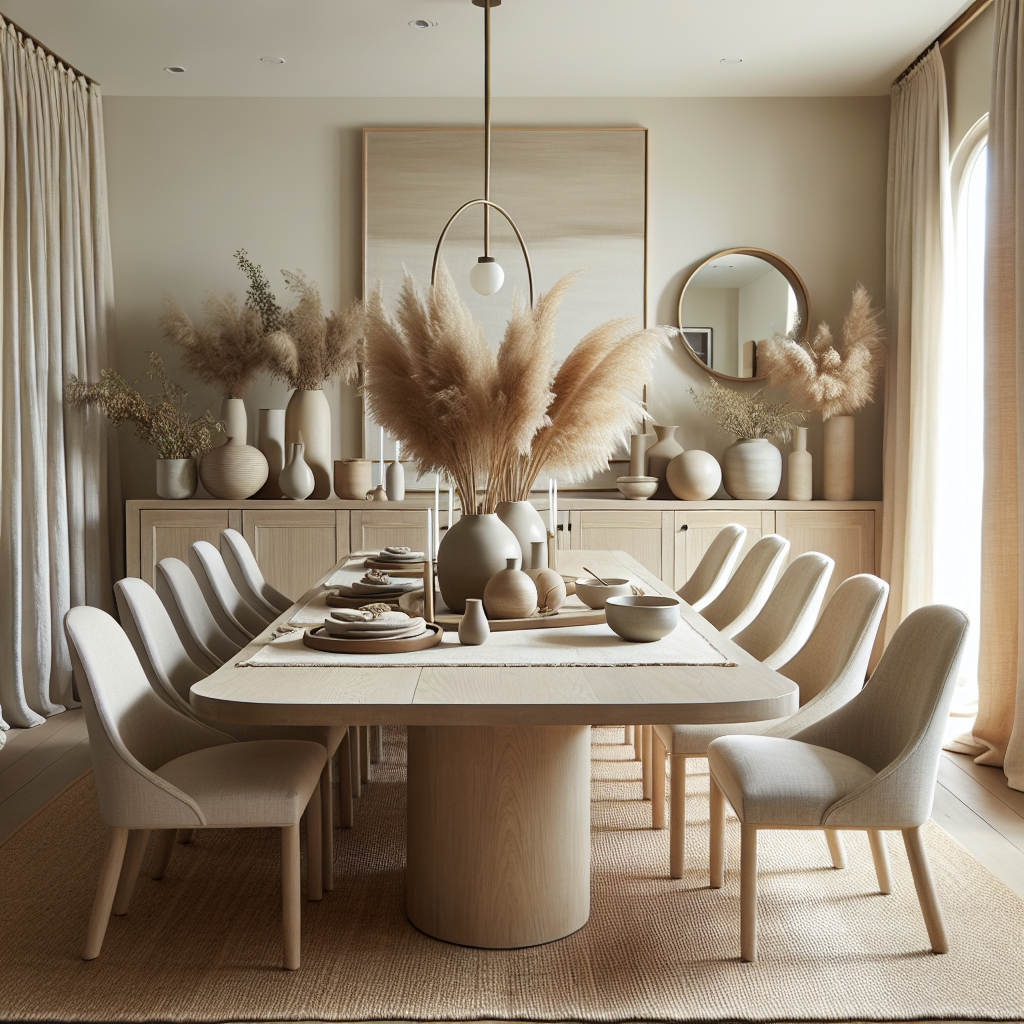
Neutral dining rooms thrive on simplicity. Stick to a few well-chosen accessories — maybe a ceramic vase with dried stems, a wooden tray, or a few candles.
Clutter can quickly overwhelm a room meant to feel calm and collected.
10. Bring Nature In
Nature pairs beautifully with a neutral palette. Try adding a few plants or dried florals to soften corners or bring some life to your table.
- A fiddle leaf fig in the corner
- Eucalyptus or pampas grass in a glass vase
- Herb centerpieces in small clay pots
Even better? These green touches clean the air while uplifting your mood.
11. Incorporate Black Accents
If you want a bit of drama, introduce black through light fixtures, picture frames, or chair legs. A little contrast goes a long way and keeps the room from feeling too monotone.
Design note: Don’t go overboard — just a touch of black here and there will do the trick.
12. Curate a Gallery Wall With Neutral Tones
Gallery walls don’t have to be colorful to be impactful. Frame black-and-white photography, minimalist sketches, or sepia-tone prints for a look that’s both artsy and aligned with your palette.
Align the frames neatly or create an organic flow — either way, it adds visual interest.
13. Use Mirrors to Reflect Light
Want to make your space feel bigger and brighter? Hang a mirror on one wall to reflect natural light and create airiness.
Bonus: Mirrors with wooden or metal frames subtly tie in to your other decor elements without overpowering them.
Final Thoughts: Style Made Simple
A neutral dining room isn’t about playing it safe — it’s about creating a calm, inviting space where every meal feels a little more special. By thoughtfully layering textures, experimenting with materials, and keeping your palette consistent, you can design a dining area that’s both stylish and soothing.
So ask yourself: What kind of mood do I want my dining room to set? Whether that’s quiet sophistication or warm rustic charm, a neutral palette can help you get there — effortlessly.
Ready to start? Pick one or two of these neutral dining room decor ideas and let them inspire your next room refresh.
Your serene, elegant space is just a few thoughtful updates away.